Skip to content
DSD Research Library Public Research Platform
English
  • 简体中文
  • English
  • Français
  • Русский
  • Español
  • Português
Search Cases Research Atlas Papers Learn Methods

Back to the case gallery

46,XY DSD · 46,XY · DSD-C021

IMGe073d8e19f3f20 · 1890 × 1896
CaseSource publicationAtlasOpen original image
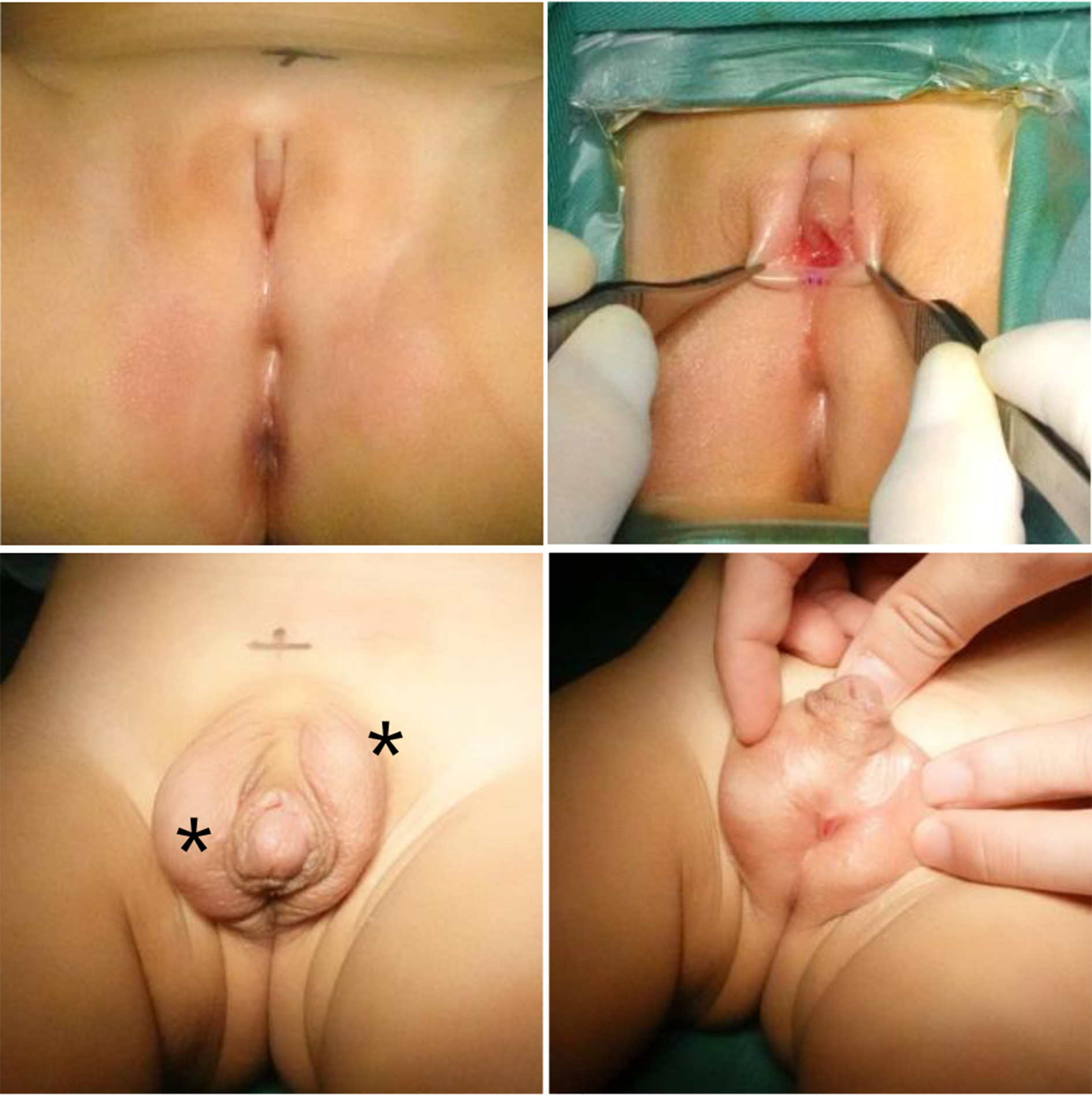
Figure 1 Appearance of the external genitalia of twins. (A,B) Twin A at 10 months of age. (C,D) Twin B at 30 months of age after stage I hypospadias repair. Testis-like masses were palpable in the area of stars.
Figure caption

Figure 1 Appearance of the external genitalia of twins. (A,B) Twin A at 10 months of age. (C,D) Twin B at 30 months of age after stage I hypospadias repair. Testis-like masses were palpable in the area of stars.

Images · 2
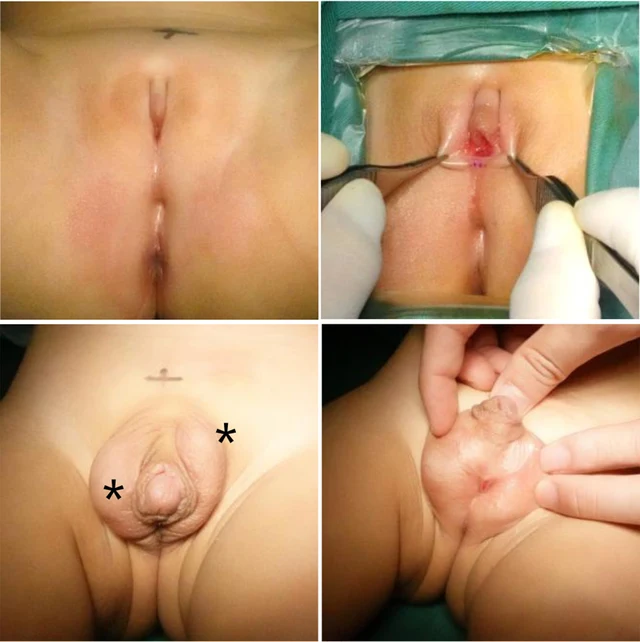
Figure 1 Appearance of the external genitalia of twins. (A,B) Twin A at 10 months of age. (C,D) Twin B at 30 months of age after stage I hypospadias repair. Testis-like masses were palpable in the area of stars. Figure 5 Postoperative appearance of the external genitalia of twins. (A) Twin A at 30 months of age after feminizing surgery. (B) Twin B at 31 months of age after stage II hypospadias repair. associated with DSD, a group of rare conditions in which the chromosomal, gonadal, or phenotypical sex is incongruent (8). We herein present a case of 46,XY identical twins with DSD and UBMS caused by a novel heterozygous de novo splicing variant (c.1551-2A>G) in PPP1R12A. This variant results in the presence of a uterus in both 46,XY twins. Twin A exhibited gonadal dysgenesis and was assigned female, while Twin B had functional testes and was raised as male. PPP1R12A encodes PPP1R12A (1030aa), also named myosin phosphatase-targeting subunit 1 (MYPT1), expressed extensively and strongly in the brain, thyroid,

Swipe left or right to browse this case’s images

Open original image
CaseSource publicationAtlasView original caption in Chinese
DSD Research Library Data version v1.4.0